The Health and Safety Executive (HSE) has started a campaign that asks employers in Great Britain to deal with hand-arm vibration and loud work before anyone is hurt. By HSE's count, roughly 15,000 people a year see their hearing harmed, or an existing problem get worse, because of their job[1].
What HSE announced
The regulator estimates that one worker in five faces a harmful level of sound while working[1]. The launch was timed to coincide with Bone and Joint Health Week[1], and the campaign extends HSE's Prevention Programme, a program that also contains its HAVS Risk Reduction Pledge[1].
HSE points out that two sets of rules from 2005, one on noise and one on vibration, already oblige employers to judge these hazards and keep them in check[1]. Where the rules call for health surveillance, HSE expects employers to set it up[1]. Campaign materials sit under HSE's Work Right banner[1].
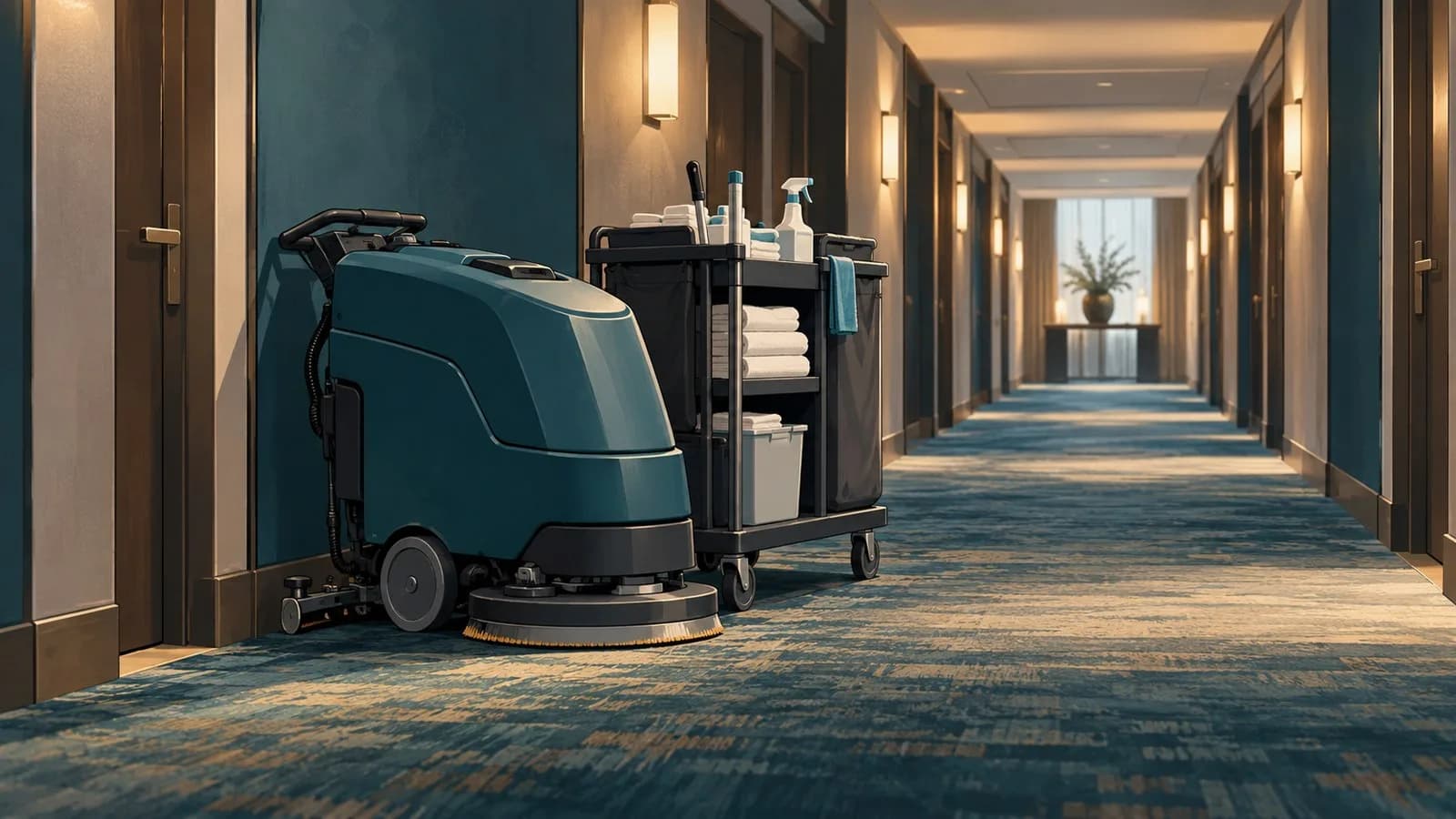
HSE lists engineering, maintenance, construction, manufacturing and agriculture among the sectors in focus, together with utilities, waste management, plus entertainment and events[1]. Hotels and commercial cleaning do not appear in that list. Even so, teams that run ride-on scrubbers, rotary polishers or commercial vacuums may want to ask their advisor how the rules apply to their own work.
The exposure levels in the regulations
For noise, employers must give workers information and training once daily exposure hits 80 dB(A), known as the lower action value[2]. From 85 dB(A), the upper action value, they must supply hearing protection and mark out areas where it has to be worn[2]. Above both sits a limit, set at 87 dB(A)[2].
For hand-arm vibration, the action point is a daily A(8) figure of 2.5 m/s2, where employers should bring in technical and organizational controls[3]. The daily ceiling is an A(8) figure of 5.0 m/s2, which exposure should never pass[3].
What this means for housekeeping teams
The campaign brings no new rules. It reminds employers that duties dating from 2005 already apply in Great Britain. Whether a given machine or shift pattern gets close to these levels depends on the equipment, how long staff run it and how well it is maintained. This article is not a compliance check and does not guarantee compliance. Hotels and contractors should confirm their position with a competent health and safety advisor.
ARPCLEAN take
What does this mean for housekeeping?
For cleaning contractors
- Machine list: note which powered floor care machines each crew uses and for roughly how long per shift, so your advisor can judge exposure.
- Risk assessment: check with your advisor whether noise and hand-arm vibration are covered and whether health surveillance is needed for any staff.
For hotels
- Shared equipment: if your in-house team or a contractor uses hotel-owned scrubbers or polishers, agree who assesses and maintains them.
- Contracts: ask your contractor how they handle noise and vibration duties, and check with your advisor what you need on file.
Printable checklist for room cleaning and inspection in hotels.
Open the checklist →Sources
- 1Noise and vibration: HSE warns employers not to wait until the damage is doneHealth and Safety Executive (HSE) ·
- 2Noise at work: The Control of Noise at Work Regulations 2005Health and Safety Executive (HSE)
- 3Hand-arm vibration: The Control of Vibration at Work Regulations 2005Health and Safety Executive (HSE)
External links open in a new tab.
About this story
ARPCLEAN Editorial
Archie Grey is the pen name of the ARPCLEAN editorial team for English-language news. This story was prepared with AI assistance, checked against the linked sources and approved by our editors before publication. Spotted a mistake? Write to [email protected].
No corrections since publication.