OSHA, the federal workplace safety agency, published a new fact sheet on September 24, 2026, so that US employers and their staff can act fast when someone has an opioid overdose on the job[1]. The document deals with overdose rescue using reversal drugs and belongs to the federal Great American Recovery Initiative[1]. For hotels the question is practical. Room attendants, housepersons and contract cleaners walk into guest rooms, stairwells and back areas all day, and they may be the first people to find someone who does not respond.
What the fact sheet covers
OSHA says the material is meant to help workplaces spot an overdose and respond without delay[1]. It lists warning signs workers should learn: breathing that is slow or has stopped, lips or skin turning blue, very small (pinpoint) pupils, and a person who shows no response[1].
The agency suggests treating overdose kits the way you treat first aid. Keep them where people can see them and reach them easily, as with defibrillators (AEDs) or regular first aid kits[1]. It also recommends training workers to give the medication, put the person in a safe position and care for them until first responders get there[1]. According to OSHA, reversal medications bring back normal breathing quickly and generally do nothing if no opioids are in the person's system[1].
Calling 911 comes first
The guidance is clear that the medication does not take the place of emergency services[1]. Responders at work should call 911 right away, because the drug only works for a limited time and the person still needs professional medical care[1]. The Labor Department says it is working on the issue with the CDC, HHS and several other federal bodies[1].
What it means for housekeeping teams
This is a fact sheet, not a new regulation, and following it does not guarantee compliance with any federal, state or local requirement. Rules on emergency medication, training and who may administer it can differ by state and city, so check with your advisor or local authority before you change your program.
In practice, the useful step is to compare your current emergency procedure with the fact sheet. Look at who on each shift is trained, where kits would sit on guest floors, and whether staff know to call 911 before anything else. Where a contractor supplies the cleaning team, the hotel and the contractor should agree in writing whose procedure applies on the floor and who provides kits and training.
ARPCLEAN take
What does this mean for housekeeping?
For cleaning contractors
- Training: check which supervisors and attendants have learned the overdose warning signs and the response steps, in the languages your staff speak.
- Site agreement: confirm with each hotel who stocks the kits, where they are, and whose emergency procedure your team follows.
For hotels
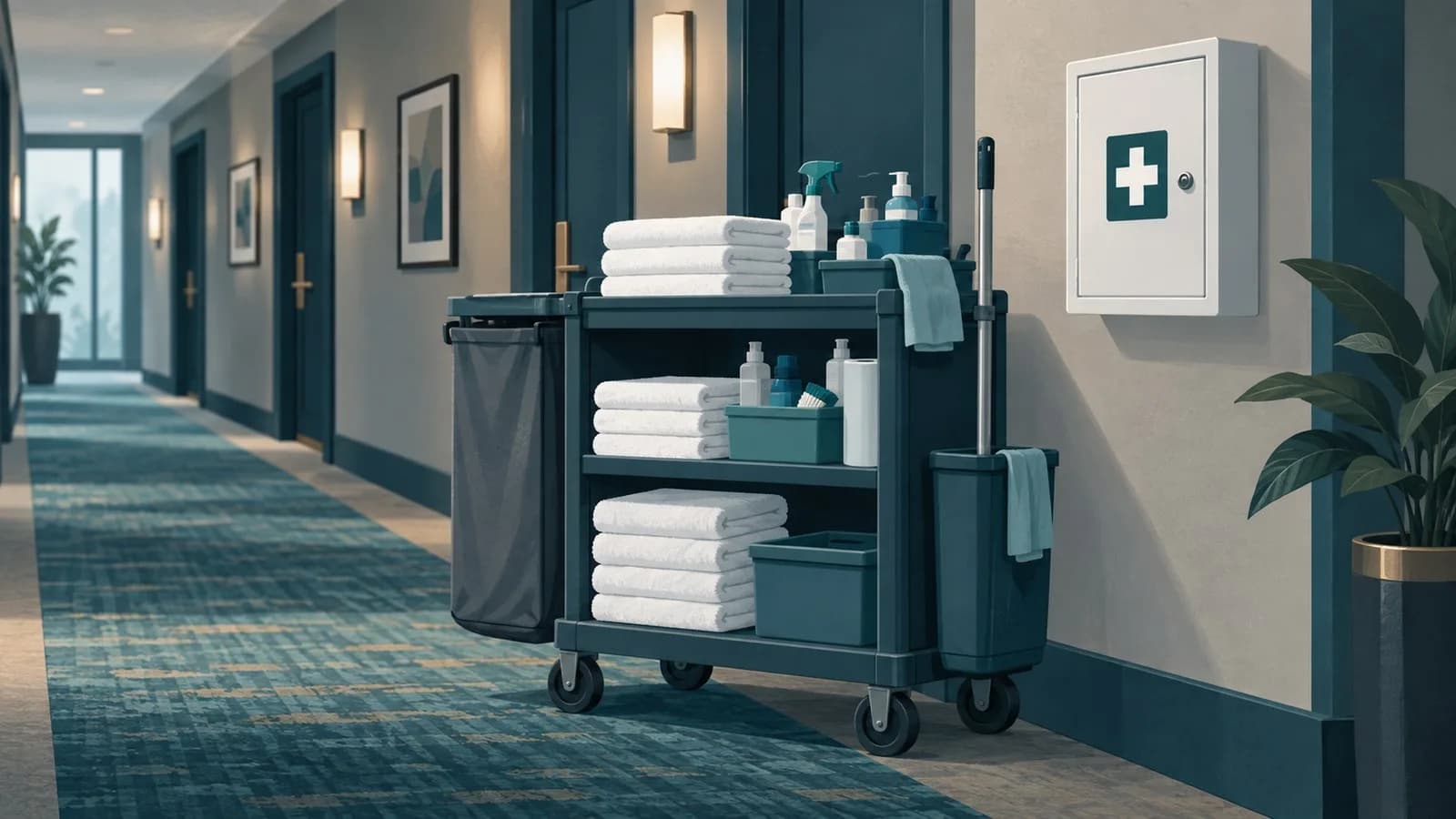
- Kit locations: review whether kits are visible and easy to reach, for example next to AEDs or first aid cabinets.
- Room entry procedure: add a clear step for an unresponsive guest: call 911 first, then alert the manager on duty.
Printable checklist for room cleaning and inspection in hotels.
Open the checklist →Sources
- 1US Department of Labor releases new workplace guidance to prepare employers, workers for opioid emergenciesOccupational Safety and Health Administration (OSHA), U.S. Department of Labor ·
External links open in a new tab.
About this story
ARPCLEAN Editorial
Archie Grey is the pen name of the ARPCLEAN editorial team for English-language news. This story was prepared with AI assistance, checked against the linked sources and approved by our editors before publication. Spotted a mistake? Write to [email protected].
No corrections since publication.