Since October 1, 2026, the UK's illegal working rules reach past the direct employer. Section 48 of the 2025 border security and immigration law took effect on that date[1], bringing subcontractors and contract chains within the scope of right to work checks. The Home Office puts the civil penalty at as much as £60,000 for every illegal worker[2].
What changed
Section 48 stretches the illegal working provisions of the 2006 Act, found in its sections 15 to 24, so they also cover arrangements that are not standard employment[1]. One group now covered is individuals engaged by a business that has, in turn, agreed to deliver work or services for a third party[1]. A new section 15A targets businesses that win a contract for work or services and then hand some or all of it on to another provider[1].
The Home Office impact assessment names agency staff and gig economy workers, who deliver services under a company's name, as examples[2]. It says the goal is to widen the circle of employers and businesses obliged to run checks, so that illegal working is stopped[2]. The CIPD says the government has widened checking duties to more types of workers and added measures for layered contracting, where it has often been unclear which party should do the checks[3]. The Home Office released the final version of its employer guidance on the checks for the October 1 start[4].
Why hotel housekeeping is in scope
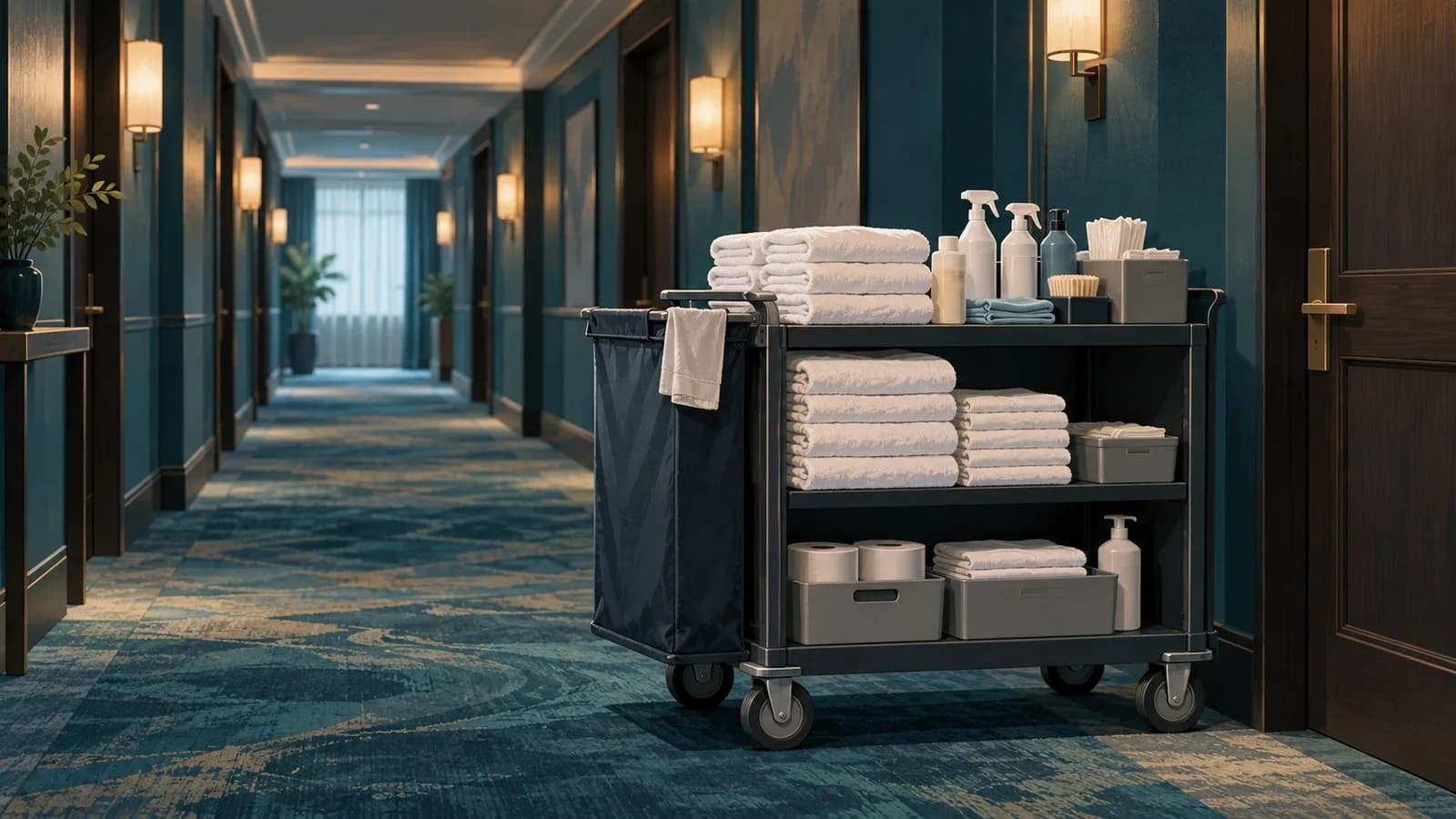
Housekeeping in UK hotels often runs through several layers. A hotel hires a cleaning company, which may bring in agency staff or self-employed room attendants, sometimes through a further subcontractor. Layered setups like these are exactly what the new rules address. The Home Office has said that firms using gig economy workers must confirm that people working under their brand are allowed to work in Britain[5].
Penalties listed by the Home Office for illegal working include fines as high as £60,000 for each worker, closure of the business, disqualification of directors and up to 5 years in prison[5]. Which party in a given chain holds the duty depends on the contracts and the facts. This article covers the UK only and is not legal advice. Check the official guidance and your contracts with an employment or immigration advisor.
ARPCLEAN take
What does this mean for housekeeping?
For cleaning contractors
- Map your chain: List every agency, subcontractor and self-employed attendant working on each hotel contract.
- Evidence: Review how proof of each person's status is stored and compare it with the final Home Office guidance.
- Contracts: Agree with your advisor which party handles checks under each subcontract.
For hotels
- Ask in writing: Ask your cleaning contractor who checks the work status of on-site housekeeping staff, agency workers included.
- Advisor: Ask your employment or immigration advisor how section 48 applies to your outsourced housekeeping.
Staff, minutes per room and cost per room in one calculation.
Calculate cost per room →Sources
- 1Border Security, Asylum and Immigration Act 2025, section 48: Extension of prohibition on employment to other working arrangementslegislation.gov.uk (The National Archives)
- 2Extension of prohibition on employment to other working arrangements: impact assessment (accessible)Home Office (GOV.UK)
- 3UK employment law round-up September 2026: Are you on top of changes to right to work checks?CIPD ·
- 4Right to work checks: an employer's guideHome Office (GOV.UK) ·
- 5Crackdown on illegal working and rogue employers in 'gig economy'Home Office (GOV.UK) ·
External links open in a new tab.
About this story
ARPCLEAN Editorial
Archie Grey is the pen name of the ARPCLEAN editorial team for English-language news. This story was prepared with AI assistance, checked against the linked sources and approved by our editors before publication. Spotted a mistake? Write to [email protected].
No corrections since publication.